

Welcome to Lay it on the Line, a letter exchange between seven writers: Julia Adzuki, Stacy Boone, Yasmin Chopin, Donna Fisher, Bee Lilyjones, Amanda C Sandos and Julie Snider.
Throughout 2026, we’re exploring what it means to rethink our relationship with the natural world. Each month, one of us writes an open letter responding to the previous writer and addressing the next.
Dear Amanda,
Our friend Donna wrote to me about her ties to the far north-east of England, where she was born, and to Queensland, where she lives now.
After Donna left England for Australia, she began to delve into Northumberland’s ancient history. Reading her letter nudged my memories of time spent in that county over a few pre-COVID years. I’d rent a wee holiday cottage out of season on the fringe of the Northumberland National Park while writing Visitors Book. At that time, I was part of an online writing school, and so was Donna; that’s how we ‘met’.
Walking with Poppy dog to and from the site of Ad Gefrin1 helped shift my focus from fiction to non-fiction. Ad Gefrin was a seventh-century royal settlement at Yeavering, where early Northumbrian kings held court, gathered followers, and displayed their power. One year, when I arrived back in Cumbria, I put the manuscript Visitors Book into the proverbial drawer.


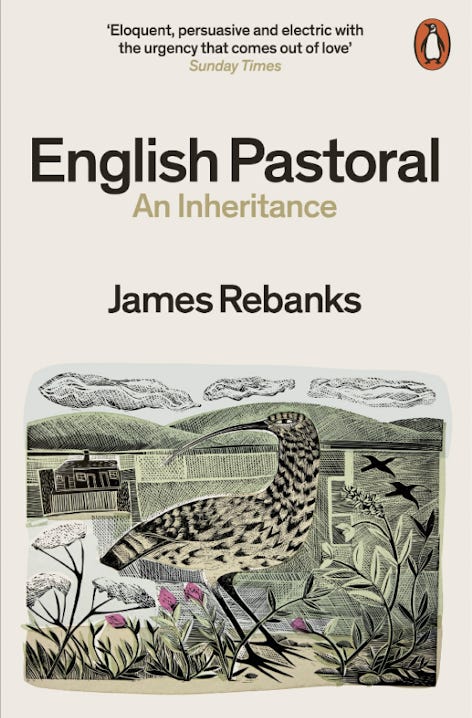
Donna, who has spent years now trying to understand Australia’s deep history, recommended Bruce Pascoe’s Dark Emu. I’m reading it now, and wonder if we might keep up the book recommendations: one book about where each of us lives. I’d love to send you a copy of English Pastoral by James Rebanks. What do you think?
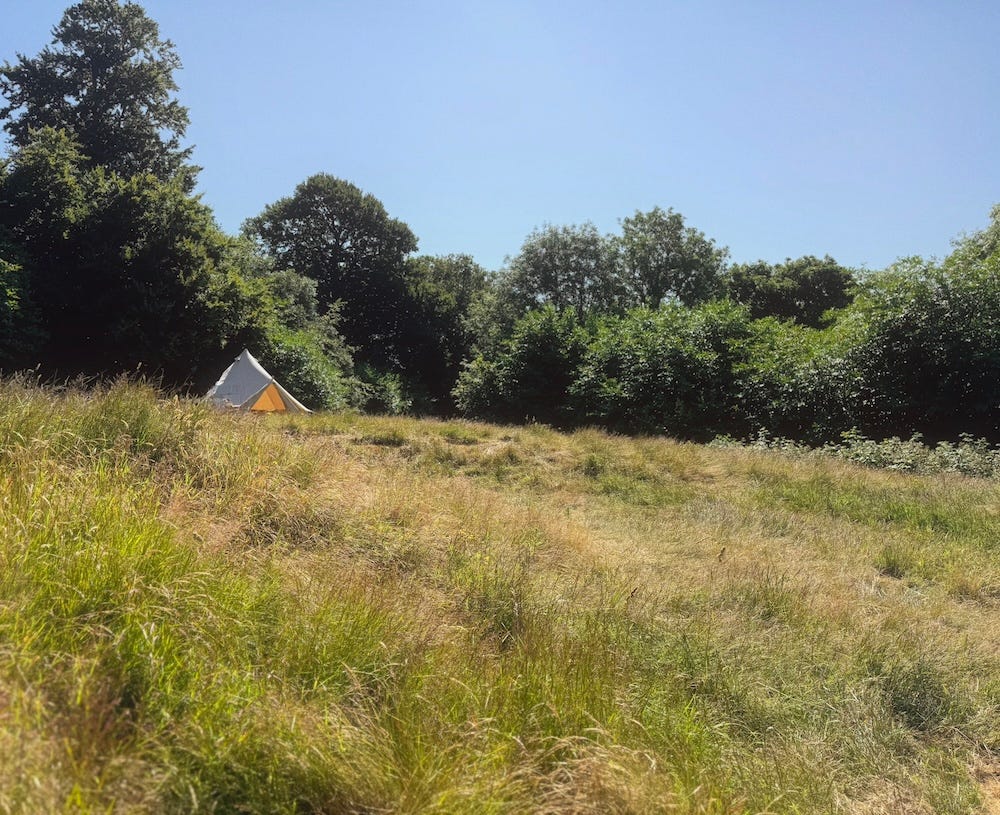
As you well know by now, Amanda, I’ve been researching the history of the village where I live with M and our grown up son, and over the years that work has become an online archive: a way of saying thanks to the place that has held us. Getting to know the geology, geography, ecology, and history of a place has become the through-line of the book I’m writing now, Before We Leave, a story of moving home. M and I have been travelling back and forth between Cumbria and a meadow campsite in Dorset. In both places, I trace lives that history might otherwise forget because a headstone is crumbling, or because a housing estate stands where there was once a farmhouse. In Dorset, I write about a homesick merchant in 18th century Rouen sending letters to his sister, and about his niece’s wedding in Wimborne Minster, Dorset, on Christmas Eve thirty years later.
Anyway, Donna asked if I might start a new archive when we move back down south. I’m glad she asked because I’d been giving it a lot of thought.
I imagine I will begin, as I began here in Cumbria, with an ecological survey of sorts, in a field notebook. In his first book, The Shepherd’s Life, James Rebanks wrote about the word “hefted.2 In Cumbrian farming, a hefted sheep has inherited a deep, instinctive knowledge of its own fell.3 Rebanks applies this to humans, arguing that we cannot care for a place unless we are “hefted” to it, unless we know its patterns, boundaries and history well enough to belong to it and protect it.
In my field notebook I’ll record what grows there (wherever “there” may be). But what else is going on? What lives there, moves through there, feeding, sheltering? What is changing? Does water gather or run off? Are fungi breaking down wood? Is shade increasing? Is drought stress showing? My next book will be called Now We Are Here: a field notebook.
Moving will be an adventure, though one to approach with more caution than if we were in our twenties. Rather than return to Dorset to live, our hearts are set on Cornwall, Mevagissey, perhaps. Nearby, the Lost Gardens of Heligan hold a special place in our hearts, but we’re aware we must be flexible for a heap of practical reasons, not least our finances. I know that within the year you will leave your family home in Virginia, and that you are making the most of what remains there, your art studio, the familiar light, the life built around that place. You too may arrive somewhere new, somewhere that doesn’t yet know you and that you don’t yet know.


Do you think a place can ‘heft’ you if you arrive in it late in life, or does that belong only to childhood? I am, as ever, interested in your thoughts, Amanda.
With love,
Bee
Shag, Grey Seal and Pup, Mevagissey, October 23, 2024. Bee Lilyjones
Ad means “at,” “by,” or “near.” Gefrin seems to come from older Celtic/Brittonic words meaning “goat” and “hill”, so the name may describe the place by its landscape: the settlement near the hill associated with goats.
Hefted comes from the Old Norse hefð, meaning “tradition”.
Rebanks, James. The Shepherd’s Life: A Tale of the Lake District. Allen Lane / Penguin UK, London, 2015.
A “fell” is a high, barren mountain or upland moor. It is most commonly used in Northern England (especially Cumbria and the Lake District), Scotland, the Isle of Man, Iceland, and Scandinavia. (Wiki)
Letters, being passed around the world. One letter leading to the next one. An exploration of our voices. This Bee, another installment in a sharing of words, is as rewarding as it is exposing.
There is always a lot of gratitude in your writing, what you share about your community, what it will feel like to leave a place where you have been a part of the fabric. What happens to that fabric when you depart. Who carries the memories.
I love this word—hefted—not just a knowledge of place but the instinctive knowledge. Likewise, its defining as tradition. How, if I turn this idea a bit, having the knowledge might lead to protecting and offering a greater appreciation of place.
There is no better way to record than with a Field Notebook. A journal, a sketch pad, a proper identification of any and all of the wonderful things you are sure to see, experience. I think Field Notebooks should become required practice as our species becomes more and more detached from what once was.
Your letter, extends the conversation, reminds of connection—near and far--, and the essentialness of memories. This is the value of this LiotL collaboration.
Bee, the care with which you invest yourself in truly knowing a place and its peoples gives me hope that more of us will feel the connections between ourselves and the natural and cultural communities that hold us. Thank you for such a lovely letter!